ICU Care Specialist7 min read
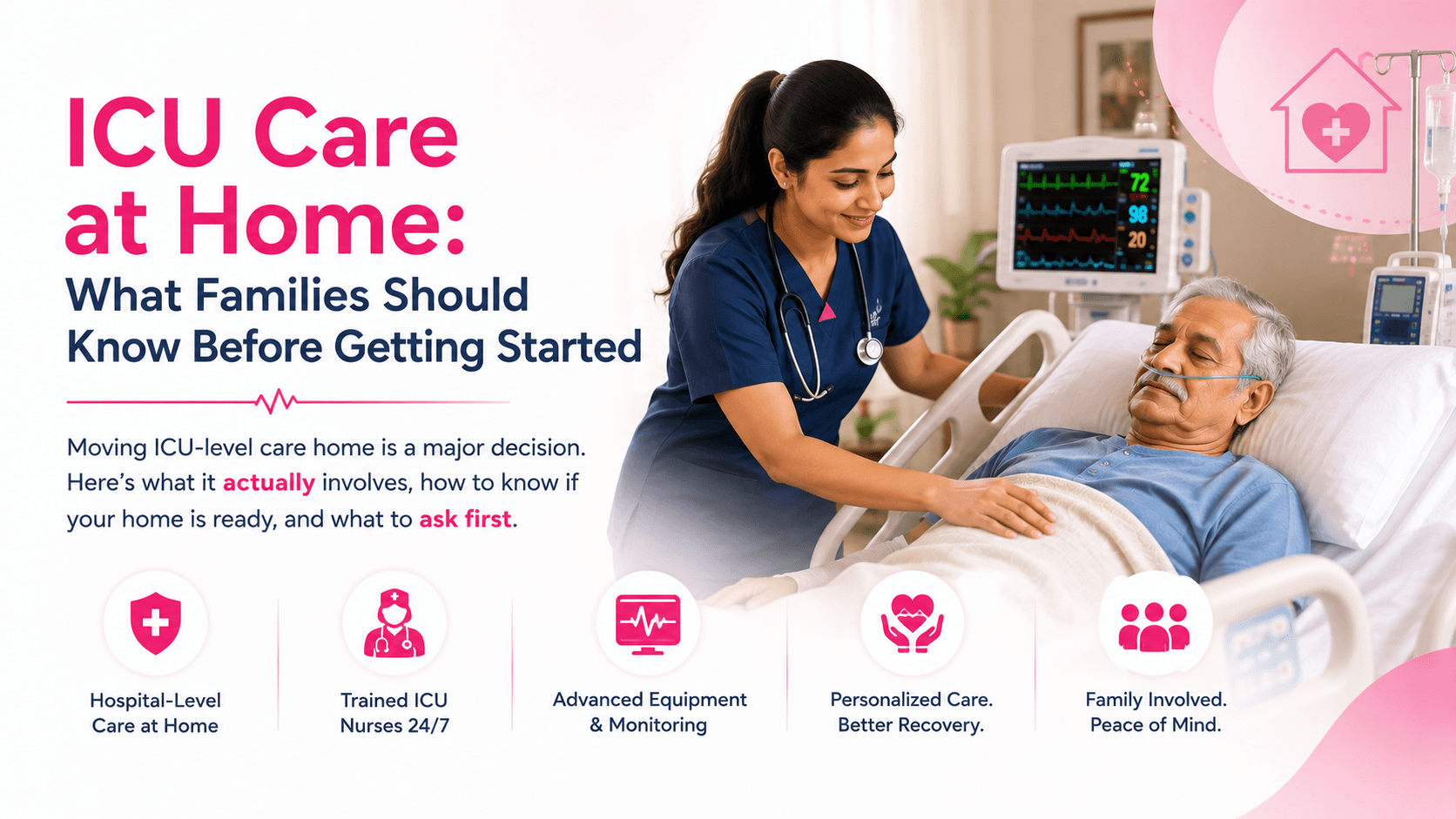
Choosing to continue ICU-level care at home instead of in a hospital is one of the bigger decisions a family can make — and it should always be made together with the patient's treating doctor, not in place of that conversation.
What Home ICU Care Typically Involves
- Continuous monitoring of vitals — heart rate, oxygen levels, blood pressure
- Ventilator or oxygen support, where the patient's condition requires it
- A certified ICU-trained nurse present according to the agreed staffing pattern
- Direct coordination with the hospital's discharge and treating team
- A clear emergency response and re-admission plan
Is Your Home Ready?
- Enough space for monitoring and support equipment near the bed
- Reliable power, ideally with backup, for anything electrically dependent
- A hygienic, easily cleanable setup around the care area
- Clear, accessible entry and exit in case emergency transport is needed
Home ICU care is not the right fit for every case. This should always be assessed and approved by your treating doctor before anything is arranged.
What to Ask Before Starting Home ICU Care
- Exactly what equipment is included, and who maintains it
- Whether staffing is round-the-clock or in shifts, and how handovers work
- What the emergency escalation plan looks like, step by step
- How costs are structured, so there are no surprises later
Done well, home ICU care can mean a critically ill patient recovers surrounded by family instead of hospital walls. Done without proper planning, it can put the patient at real risk — the planning stage is not something to rush.